Desk-Bound Corporate Executive (Age 46)
Baseline Presentation: Participant spent 9.5 hours daily seated in corporate settings. Average daily movement was 3,400 steps characterized by irregular, slow cadence (~78 SPM). Initial kinetic assessments identified significant anterior pelvic tilt, reduced passive hip extension (-8 degrees), and subjective reports of chronic afternoon postural fatigue.
Structured Intervention: A progressive 12-week protocol was implemented: three daily 15-minute walking bouts at an metronome-guided cadence of 110-114 SPM, combined with an 8-minute morning kinetic posture reset focused on hip flexor lengthening and thoracic extension.
| Biomechanical Marker | Week 0 (Baseline) | Week 12 (Post-Protocol) | Net Adaptation |
|---|---|---|---|
| Daily Stepping Volume | 3,400 steps/day | 9,250 steps/day | +172% Total Locomotor Activity |
| Average Brisk Cadence | 78 SPM | 112 SPM | +43.5% Mechanical Efficiency |
| Active Hip Extension Angle | -8 degrees | +7 degrees | +15 Degrees Sagittal Mobility |
| Resting Cardiac Rate | 73 BPM | 66 BPM | -7 BPM Resting Heart Rate |
| Self-Reported Postural Fatigue | 8.4 / 10 | 2.6 / 10 | 69% Reduction in Subjective Fatigue |
Master Recreational Runner (Age 52)
Baseline Presentation: Experienced amateur runner completing 40 km weekly. Exhibited a low running cadence of 152 SPM with excessive vertical oscillation and long ground contact braking times (285 ms), resulting in recurrent calf tightness and achilles discomfort.
Structured Intervention: Recalibration of running cadence to 170-174 SPM via audio biofeedback, while capping 80% of weekly endurance volume strictly within Zone 2 heart rate zones (128-138 BPM) to reduce musculoskeletal stress and promote capillary adaptation.
| Biomechanical Marker | Week 0 (Baseline) | Week 16 (Post-Protocol) | Net Adaptation |
|---|---|---|---|
| Running Stride Frequency | 152 SPM | 172 SPM | +20 SPM Optimal Elastic Recoil |
| Ground Contact Duration | 285 ms | 242 ms | -43 ms Braking Impulse Decrease |
| Vertical Oscillation | 10.4 cm | 7.8 cm | 25% Reduction in Impact Shock |
| Zone 2 Aerobic Base Velocity | 6:15 min/km | 5:28 min/km | 47 sec/km Faster at Same Cardiac Output |
Corporate Movement Cohort (42 Adult Men, Ages 35-59)
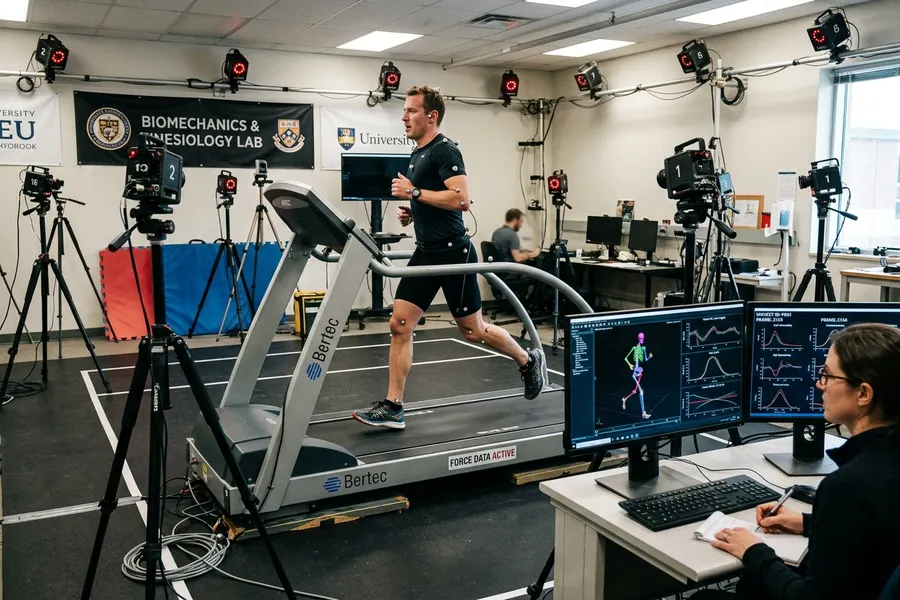
Study Design: A 10-week workplace kinesiology initiative involving 42 male participants in sedentary administrative roles. Participants integrated three daily 8-minute brisk walking rounds at 108+ SPM and dedicated lunchtime kinetic alignment drills.
| Measured Dimension | Cohort Mean (Pre) | Cohort Mean (Post) | Statistical Significance |
|---|---|---|---|
| Daily Active Minutes | 22 min / day | 58 min / day | p < 0.001 |
| Sit-to-Stand Functional Power | 11.4 reps / 30 sec | 16.8 reps / 30 sec | +47.3% Lower-Limb Power |
| Active Thoracic Rotation | 42 degrees | 56 degrees | +33.3% Mobility Increase |
| Midday Energy Perception Index | 4.1 / 10 | 7.9 / 10 | +92.6% Perceived Vitality |